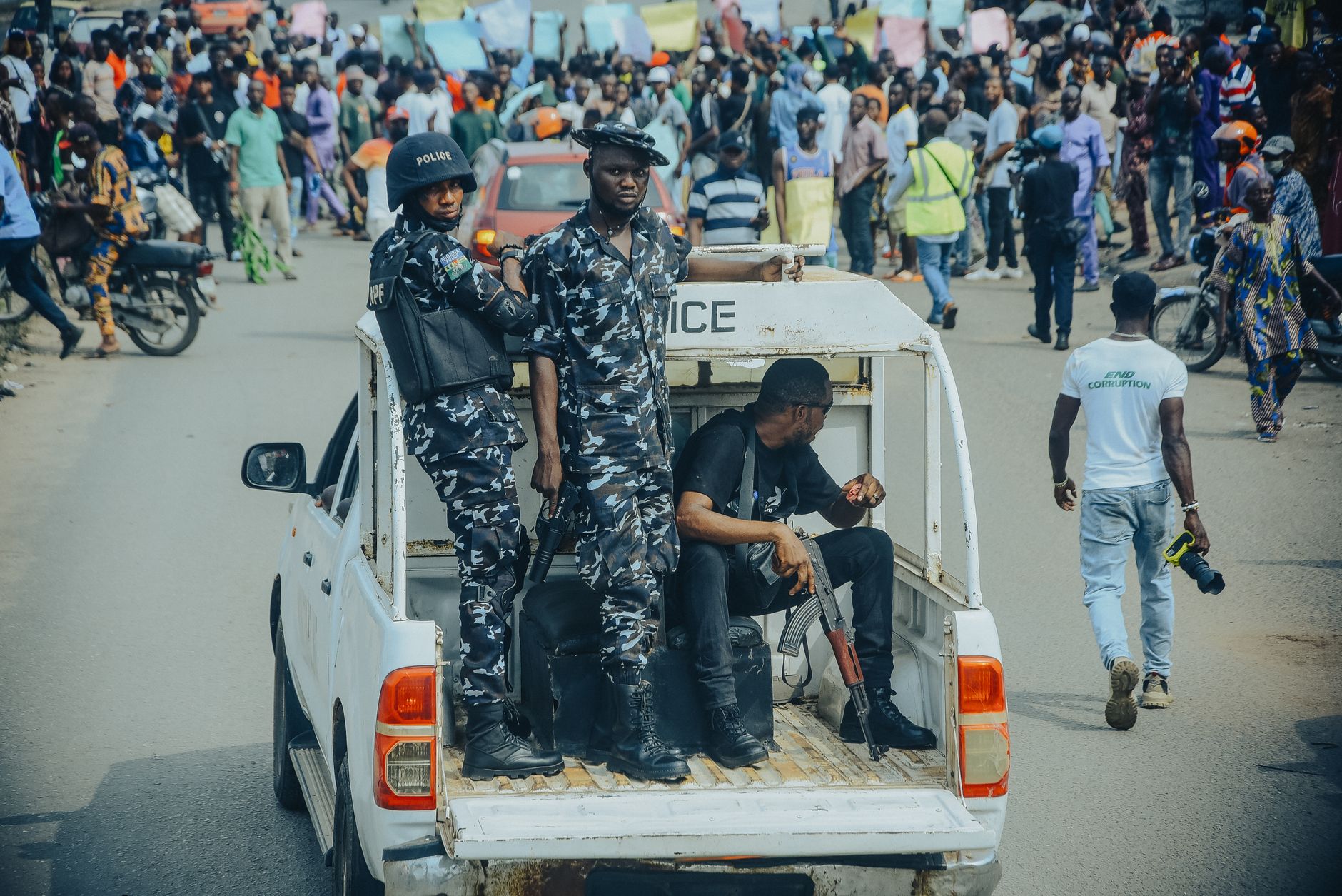
On Thursday, October 15, 2026, the Federal Government hovered on the verge of declaring a nationwide state of emergency. President Bola Ahmed Tinubu presided over a full convening of the nation’s War Council, issuing stern marching orders to the armed forces: take the offensive directly to the underworld, liberate every hostage, and dismantle the extensive network of bandit hideouts spanning the country.
Relaying this mandate, Defence Minister Gen. Christopher Musa (retd) stated that the commander-in-chief directed security forces to relentlessly track down and free every abducted victim, emphasizing that no enclave of violent extremists or bandits would be tolerated on Nigerian soil. Within forty-eight hours, Chief of Army Staff Lt. Gen. Waidi Shuaibu landed in Maiduguri, Borno State, spearheading the operational execution of the presidential decree.
Yet one must ask why top military officers need specific presidential prompting to perform their primary constitutional mandate—the very duty for which they collect monthly salaries and enjoy official privileges. Nevertheless, these pronouncements are notable because, despite numerous flattened towns and ruined hamlets offering grim proof of an active conflict, the administration either fails to recognize that Nigeria is in a state of war or deliberately chooses to look away.
Political convenience largely drives this official denial. In the North East, armed aggressors are branded as terrorists and urged to disarm. In the North West, they are categorized as bandits who ought to seek rehabilitation. Yet, when equivalent atrocities strike the Middle Belt, authorities downplay mass killings as mere “herder-farmer disputes,” rebranding murderers as simple pastoralists while preaching the virtues of mutual harmony. Nigeria appears to be the only place on earth where herdsmen employ rocket-propelled grenades to guide livestock, and agrarian communities must wield Kalashnikov assault rifles simply to work the soil.
Rather than relying solely on grand rhetoric, the War Council should focus on immediate, decisive objectives. A crucial first step is to reclaim the dozens of communities across Benue and Plateau States that have been occupied, renamed, and settled by violent invaders. Liberating these territories would deliver an unambiguous message that impunity is ending, while enabling displaced citizens to return home. It would also rescue an entire generation of children from growing up confined to displacement camps, preventing a permanent cycle of generational displacement.
Equal application of the law is vital; criminality must be recognized as criminality regardless of the perpetrator’s ethnic or religious background. Furthermore, while the administration is ramping up security recruitment, sheer enlistment numbers will not cure this crisis. The true remedy lies in sanctioning community self-defense. Armed aggressors routinely steer clear of fortified, capable settlements. A working blueprint already exists in the Civilian JTF, where community members receive formal military training to protect their localities. While detractors fear such frameworks—much like state policing—could be misused, almost any vital tool can be abused without justifying its outright ban.
The authorities’ deep hesitation to endorse civilian self-reliance stems from a fear of losing total control over an oppressed population. A well-defended populace cannot be easily coerced, and unconstitutional grabs for power become significantly harder. For nearly three decades of military rule, the state retained an absolute monopoly on violence—a monopoly now usurped by criminal factions. The government must have faith that ordinary Nigerians, if granted the legal capacity to safeguard their families, will exercise that responsibility prudently.
President Tinubu also instructed the armed forces to guarantee a tranquil environment for the 2027 general elections so citizens can vote free of harassment, with Minister Musa assuring that the military will maintain strict neutrality and professionalism. While reassuring on paper, such pledges ring hollow against the backdrop of the August 15, 2026 polls in Osun State. Security agencies have frequently functioned as instruments of electoral misconduct rather than neutral arbiters, raising fundamental questions about the military’s lawful place in electoral oversight.
Presently, Nigeria’s three most profitable enterprises appear to be high political office, organized banditry, and fuel market speculation. Governors across partisan lines rush to align with the central government not out of public interest, but to shield their unverified fortunes and preserve personal influence. Simultaneously, kidnapping and banditry require minuscule startup costs, carry nominal personal risk, and yield massive ransoms, enticing impoverished families to push youth toward criminality. Meanwhile, fuel cartels fix predatory tariffs on an immobile public deprived of functional public transit systems. A nation operating under such terms falls far short of a genuine democracy.
