
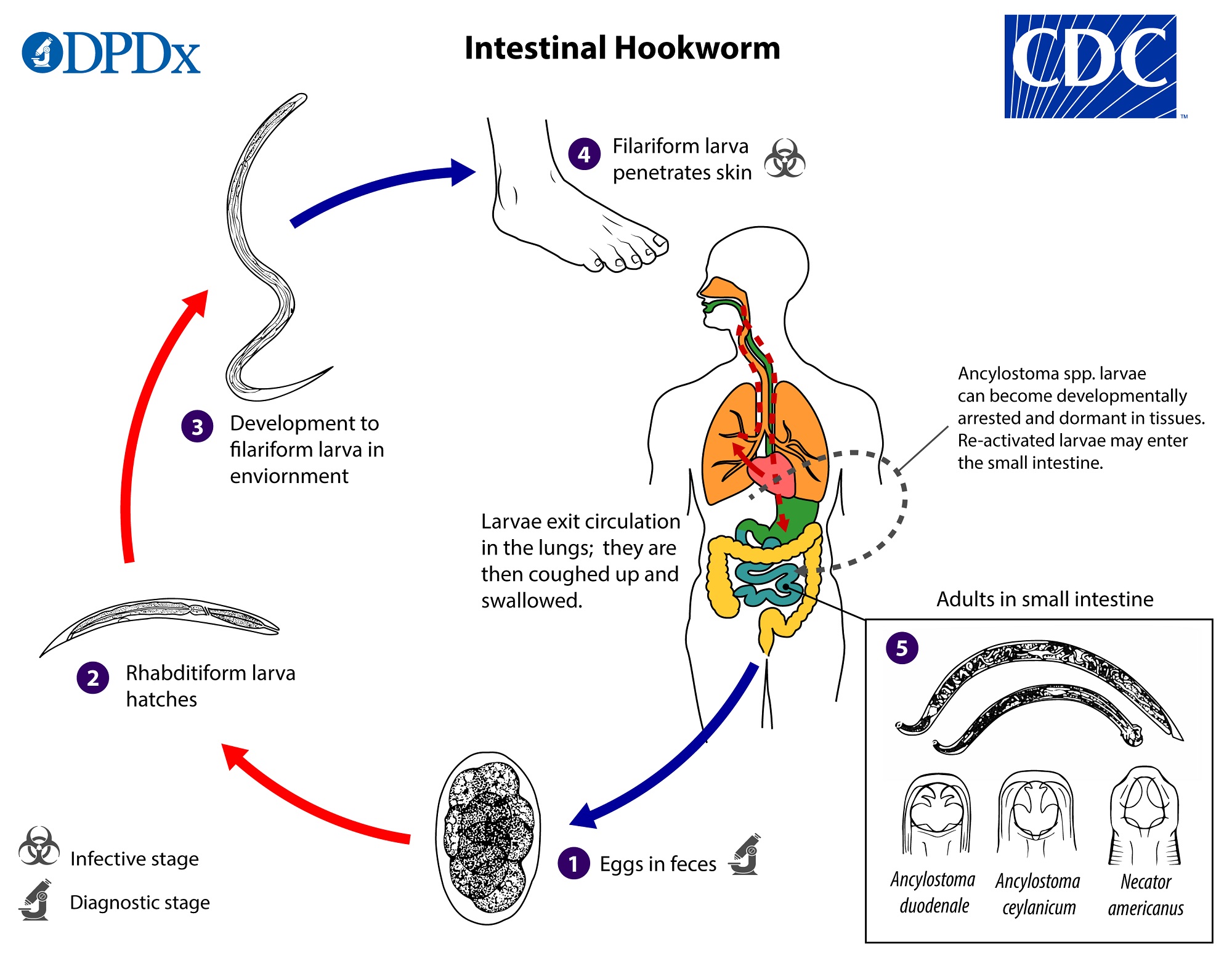


Worms (intestinal parasites, helminths) are common in many parts of the world because of certain environmental, hygienic and behavioural factors:
-
The major types that infect humans include nematodes (roundworms such as Ascaris lumbricoides, whipworms, hookworms) and cestodes (tapeworms) among others. World Health Organization+2Healthline+2
-
Transmission routes vary depending on the worm:
-
Soil-transmitted helminths: eggs in human faeces contaminate soil, water or surfaces; people ingest the eggs (via dirty hands, food, water) or — in case of hookworms — larvae may penetrate the skin (for example walking barefoot). Verywell Health+1
-
Foodborne worms (like many tapeworms): eating under-cooked or raw meat or fish that contain larvae. Cleveland Clinic+1
-
-
Poor sanitation, inadequate hygiene (hand-washing), contaminated water/food, and barefoot exposure increase risk. World Health Organization+1
-
In children especially in low-income or tropical settings worm burden can be high and contribute to malnutrition, impaired growth, anaemia. World Health Organization+1
So in short: humans can have worms because the environment and behaviours permit worm eggs or larvae to reach the body, survive and mature there.
How do we know we have worms (signs, symptoms, diagnosis)


Common signs & symptoms
Worm infections often produce subtle or nonspecific symptoms—but here are typical indicators:
-
Gastrointestinal symptoms: stomach cramps, pain, nausea, vomiting, diarrhea. WebMD+1
-
Itching around the anus (especially pinworms) or skin rash (hookworm larvae penetration) or cough and respiratory symptoms if larvae migrate. Verywell Health
-
Unexplained weight loss, poor appetite or conversely increased hunger (depending on worm type) or fatigue. Cleveland Clinic+1
-
Visible worms or worm segments in the stool or around the bed linen/anal area (for pinworms).
-
Blood loss/anaemia (especially hookworms), nutritional deficiencies. Verywell Health+1
-
Especially in children: impaired growth, developmental delay, stunted growth due to heavy worm burden. World Health Organization
How is diagnosis made?
-
Often stool (faeces) examination for eggs or worms.
-
For pinworms: the “tape test” (adhesive tape applied to the perianal area early morning to pick up eggs).
-
Sometimes more advanced tests (blood counts for eosinophilia, imaging if larvae migrate to organs) in more serious cases.
-
However, many low-intensity infections are asymptomatic and may go unnoticed.
When to suspect worms and take action
You should consider worm infection especially if:
-
You live/travel in a high-risk area (poor sanitation, tropical zone, barefoot exposure) or have relevant exposure (undercooked meat/fish, contaminated water/soil).
-
You have persistent or unexplained gastrointestinal symptoms, itching around the anus (especially children), visible worms or segments, unexplained anaemia, growth issues in children.
-
There is known exposure (e.g., a family member with worms) — because certain worms spread easily among household/close contacts (pinworms especially).
-
Preventive (mass) deworming settings: in endemic areas, periodic deworming is recommended even if no obvious symptoms.
Always consult a healthcare provider — they will decide whether to test or treat empirically based on risk.
When to “take worm expellers” (deworming/anti-helminthic medication)
-
When a diagnosis of worm infection is confirmed (or highly suspected) by a healthcare provider.
-
In endemic settings many children are given periodic deworming (school-based or community programmes) even without confirmed diagnosis to reduce worm burden at population level. World Health Organization+1
-
When symptoms/signs consistent with worm infection and no other cause is found.
-
Simultaneously treating all at-risk household members (especially for pinworm) to avoid reinfection.
-
Before deworming: ensure good hygiene practices, treat environmental sources (cleaning surfaces, washing bedding, proper hand-washing, safe water/food). Without hygiene measures reinfection risk remains high.
In summary: You take deworming medication when infection is confirmed or likely, and you accompany it with hygiene/public-health measures.
Detailed information on Pyrantrin (Pyrantel Pamoate)
What the drug is and how it works
Pyrantel Pamoate (trade name Pyrantrin in some countries) is an anthelmintic (anti-worm) medication. WebMD+2Drugs.com+2
Mechanism: It acts as a depolarizing neuromuscular blocker for helminths (worms) — it paralyzes the worms in the intestine, making them lose grip on the intestinal wall and then they are expelled via the stool. Nesfield Pharmacy+1
Because the drug is poorly absorbed by human intestines, it acts mostly locally in the gut, which limits systemic side-effects. Medikamio
Indications (what infections it treats)
Pyrantrin is indicated for treatment of various intestinal helminth infections including:
-
Pinworm (enterobiasis) Nesfield Pharmacy
-
Roundworm (ascariasis) GoMed+1
-
Hookworm infections Nesfield Pharmacy
-
Mixed intestinal helminth infections involving susceptible species.
In Nigeria and other countries the brand-product (Pyrantrin) states use for roundworm, pinworm, hookworm. GoMed
Dosage
The dosage depends on the formulation (tablet vs suspension), age, weight, and local guidelines. Here are typical dosages:
-
For children and adults: ~ 10 mg/kg of pyrantel base as a single dose is often recommended. Medindia+1
-
For example, for the suspension:
-
6 months – 2 years: ~ 2.5 mL (depending on concentration) Medecify
-
2 – 6 years: ~ 5 mL
-
6 – 12 years: ~ 10 mL
-
12 years & above: ~12.5-15 mL as single dose (depending on weight) Medecify+1
-
-
Tablets: some countries specify e.g. children 2-6y: 2 tablets; 6-12y: 4 tablets; adults older: 5-6 tablets as single dose (for a particular strength product) in Nigeria context. Medecify
-
For pinworm infections, repeat dose after 2–3 weeks is often recommended (because eggs may hatch after initial treatment). Biomedicus
-
No special fasting is required; can be taken with or without food. Medecify
Side-Effects and Warnings
Common side-effects (usually mild and transient):
-
Abdominal cramps, pain
-
Nausea, vomiting
-
Diarrhea
-
Headache, dizziness WebMD+1
Less common / serious:
-
Allergic reactions (rash, hives, swelling) should prompt immediate medical attention. Drugs.com
-
Use cautiously in patients with liver or kidney impairment. GoMed+1
-
Use during pregnancy/breastfeeding: safety not fully established; should be used only if clearly needed and benefit outweighs risk. Medindia+1
Contraindications: Hypersensitivity to pyrantel; caution in young children (sometimes <2 years) depending on product. Nesfield Pharmacy
Precautions / Important Notes
-
Hygiene is critical: all household members may need treatment in pinworm infections to prevent reinfection. Bedding, underwear, surfaces should be cleaned. Medecify
-
Reinfection risk remains if environmental sources (soil, water, sanitation) are not addressed.
-
If symptoms persist after treatment, or if there are complications (e.g., signs of heavy worm burden, organ involvement), further evaluation is needed.
-
Interaction: e.g., piperazine may antagonize pyrantel. Medecify
-
Storage: According to product instructions (e.g., store at room temperature, keep out of reach of children) WebMD
When and how to use Pyrantrin (in context)
-
If a person is diagnosed (or strongly suspected) with a suitable worm infection (pinworm, roundworm, hookworm) and the healthcare provider prescribes it, then use Pyrantrin as directed (single dose, sometimes repeat after 2-3 weeks).
-
Ensure the patient’s weight/age is used to determine correct dose.
-
Make sure to treat anyone else at risk (family/household) especially for infections like pinworm.
-
Implement hygiene measures: wash hands thoroughly, wash and change underwear/bedding daily for a few days, clean surfaces, avoid barefoot on contaminated soil, cook food well, ensure safe water/sanitation.
-
Monitor for side-effects and seek medical advice if any severe reactions or if symptoms persist beyond expected timeframe (24–72 hours for effect) or if there are signs of complications (e.g., obstruction, anemia, organ involvement).
-
Don’t rely on “worm cleanse” supplements or deworming without medical advice. Not all suspected cases need treatment without evidence, and indiscriminate deworming may be inappropriate in some settings.
Summary
In summary:
-
Human worm infections are common in certain environments, transmitted via contaminated soil, water, food, or skin exposure.
-
You suspect worms if you have gastrointestinal symptoms, visible worms or segments, itching around anus (especially children), anaemia, or growth problems (in children).
-
Diagnosis typically via stool sample, though empirical treatment may occur in high-risk settings.
-
When appropriate, you take deworming medication (worm expeller) like Pyrantrin under medical supervision.
-
Pyrantrin (pyrantel pamoate) is a well-established medication for pinworm, roundworm, hookworm infections; single dose, good safety profile, but must be used correctly with hygiene measures.
-
Always consult a healthcare professional before starting any medication, especially for children, pregnant/breastfeeding women, or if there are complicating health issues.